








6GNet 2025 Panel
Title: Standardizing the Future: 6G’s Road Through 3GPP
Abtract: As we reach the midpoint between the 5G and 6G eras, the race to define the next generation of mobile technology is intensifying. The formal 6G study phase under 3GPP Release 20 is now in full swing, setting the stage for decisions that will shape connectivity well into the 2030s. While there is broad agreement on key goals—AI/ML-native capabilities, sustainability, security by design, and greater system capacity — active debate continues over how to translate these ambitions into concrete architectures, requirements, and timelines. This panel brings together leading experts from industry and academia to explore how 3GPP builds consensus, where technical and strategic divides persist, and what these dynamics mean for research, deployment, and global competitiveness. Participants will gain an insider’s view of the 6G standardization journey—where alignment is forming, where innovation meets contention, and how today’s choices will define the connected world of the 2030s.
Moderator:
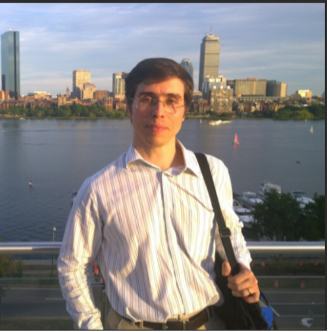
Luis Uzeda Garcia
(Nokia, France )
Bio : Dr. Luis Uzeda Garcia is an applied researcher with over 25 years of experience across academia and industry. He joined Nokia France in 2018 where he heads an international team of researchers and delegates focusing on RAN2 topics. He has led numerous R&D projects from concept to delivery, spanning various technology readiness levels. Luis holds a postdoctoral fellowship from MIT Sloan (USA), a Ph.D. in Wireless Communications from Aalborg University (Denmark), and an M.Sc. in Digital Signal Processing from the Federal University of Rio de Janeiro (Brazil). His current research focuses on 6G spectrum migration, 6G mobility and 6G for verticals.
Panelists:
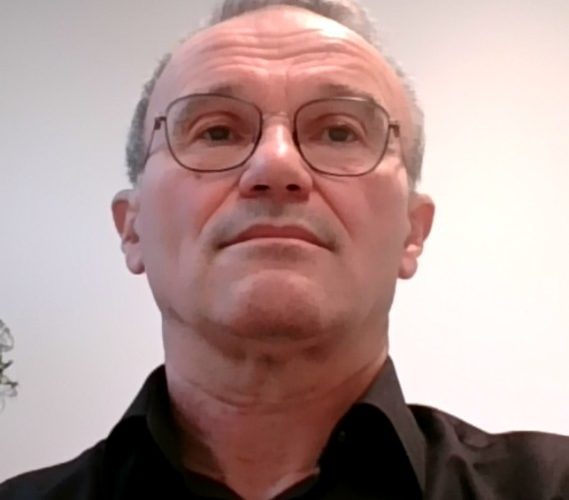
Jean-Claude Belfiore
(Huawei, France )
Bio: Jean-Claude Belfiore is the director of the Advanced Wireless Technology Lab at Huawei France Research Center. Jean-Claude received the Engineering degree from Supelec, the PhD from Telecom Paris and the Habilitation from University Pierre et Marie Curie. He was first enrolled in Alcatel and then at Telecom Paris where he became a full Professor, before joining the Huawei France Research Center in 2015.
As a professor, he has carried out research in the fields of wireless communications, coding for wireless networks, space-time coding and coding for physical layer security. In Huawei, he participated to the standardization of polar codes for 5G and is now working on 6G, especially on Native AI and semantics.
Jean-Claude Belfiore has made pioneering contributions on signal design for wireless communication systems, space-time coding, cooperative and multi-user communications. He is the co-inventor of the celebrated Golden Code and got the 2007 Blondel medal. He is author or co-author of more than 200 technical papers and communications and he has served as advisor for more than 30 Ph D. thesis.
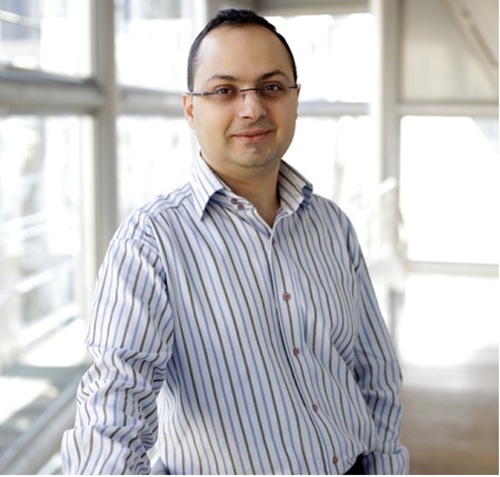
Salah-Eddine El Ayoubi
(Centrale Supelec, France)
Bio: Salah-Eddine El Ayoubi received the M.S. degree in telecommunications from the National Polytechnic Institute of Toulouse, France, in 2001, and the Ph.D. and Habilitation degrees from the University of Paris VI (Sorbonne Université), in 2004 and 2009, respectively. From 2004 to 2013, he was with Orange Labs, France, as a researcher. He joined CentraleSupélec in January 2018, where he is now a full professor. He leads the ILOCOS research team at L2S-CNRS and holds the Sustainable 6G chair funded by Orange. His research interests include modeling, performance evaluation, and optimization of mobile networks, with the primary target of achieving network energy sobriety and sustainability.
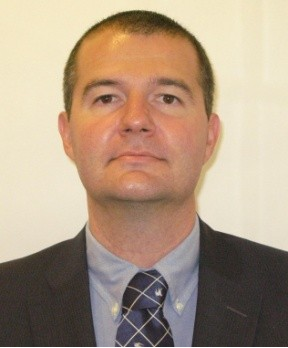
Didier Bourse
(Nokia, France )
Bio: Dr. Didier Bourse currently holds the position of Senior Director, European R&I Programs inside Nokia Standards – European Research Alliances (ERA). He received his diploma degree in telecommunications in 1992 from ENSTBr. and obtained his PhD degree in 1997 from IRCOM. He has been key contributor to the 5G Infrastructure PPP programme definition and the EC Smart Networks & Services (SNS JU – 6G) programme definition. He was/is actively engaged in the EC 5G Infrastructure PPP and EC SNS JU internal and external strategy definition (incl. implementation). He chaired the PPP Technology Board (4 years), the PPP Trials WG (2.5 years) and the PPP Vision WG – Portfolio Structuring & Analysis (PS&A) Sub-Group (full PPP Programme). He is chairing the SNS Work Programmes definition Task Force/Core Team (TF/CT) attached to 6G-IA Board and jointly defining with EC and SNS Office (SNSO) the SNS Work Programmes. He is actively engaged in the EC Marie Curie – MSCA internal and external strategy definition. He is also member of EuCNC & 6G Summit Steering Committee and member of the DigitalEurope DTI R&I Working Group that he (co)chaired for several years. He has numerous publications and patents in the areas of communications.

Sebastien Wagner
(Eurecom, France)
Bio: Sebastian Wagner is a senior wireless communications expert with over 17 years of experience spanning research, algorithm design, product implementation, and standardization. His research contributions include massive MIMO and multi-user communications, while in industry, he has developed signal processing algorithms for 4G modems and contributed to the OpenAirInterface project. Since 2017, he has focused on 3GPP standardization—initially as a delegate for TCL and now as Lead Standardization Engineer at EURECOM — driving advancements in areas such as LP-WUS, Ambient IoT, coverage enhancements, and small-block-length transmission, among others.
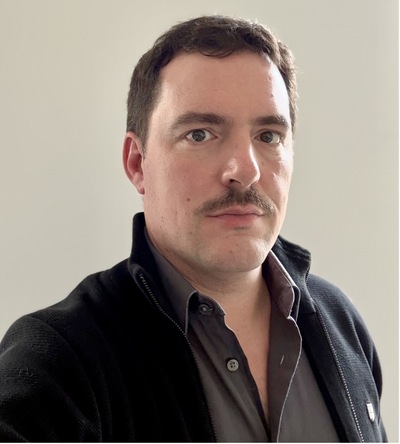
Jean Schwoerer
(Orange, France)
Bio: Jean Schwoerer holds a PhD in electronics and communication systems from the Institut National des Sciences Appliquées de Rennes (France) since 2006. Subsequently, his research work focused on IoT connectivity and mobile networks. He was also deeply involved in standardization for the Orange group, for which he was delegated to ETSI, IEEE802, and 3GPP RAN1&2, where he contributed to various IoT standard and to the standardization of 5G.
As Network and Infrastructure Research Operation Manager, and Orange Senior Expert, Jean is now mainly involved in the preparation of 6G within Orange Research, is a co-editor of NGMN 6G white paper and as a member of the 6G-IA governing board.

Illyyne Saffar
(Ericsson, France)
Bio: Illyyne Saffar is a researcher and team lead for Data and Machine Learning for Energy Performance at Ericsson. Her work investigates the application and adaptation of AI concepts and algorithms to address network automation and optimization challenges, mainly those related to short- and long-term energy savings in Radio Access Networks (RAN). She received her PhD in applied mathematics from Rennes 1 University and Nokia Bell Labs in France, where she developed AI-based methodologies for network automation. She subsequently conducted postdoctoral research with the Noah’s Ark lab at Huawei France, investigating fundamental aspects of artificial intelligence and adapting core AI concepts and algorithms to the specific constraints of telecommunications and wireless networks. Since joining Ericsson in 2022, she has been contributing to research a in “Green AI” and applied AI, aiming to enhance automation capabilities and improve the energy efficiency of 5G and 6G wireless systems.
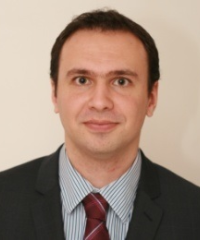
Dorin Panaitopol
(Thales, France)
Bio: Dorin Panaitopol received the PhD Degree in Telecommunications and Signal Processing from both Ecole Supérieure d’Electricité (SUPELEC) and National University of Singapore (NUS). Previously with NEC (from 2010 to 2014), Dorin joined THALES in 2014 as R&D engineer. Since 2010, Dorin has been involved in several European projects such as QoSMOS, SACRA, OneFIT, Concerto, EMPhAtiC (FP7), SHARING (CELTIC-Plus), CORRIDOR (ANR), COHERENT (H2020), HELENA (ARTES) and 6G-NTN (SNS). Dorin received the “Best Paper Award” from the European Wireless 2014 conference for the paper entitled “On the Feasibility of Cellular Resource Reuse for Device-to-Device Communications under 3GPP Network Constraints”. Dorin is currently actively involved in RAN4 Work Group as moderator and rapporteur of the Technical Specification TS 38.108 for 5G NR Satellite Access Node (5G NR Non-Terrestrial Network). Since 2020, Dorin submitted more than 600 official technical contributions at 3GPP, his work being recognized in 2024 by the Via Satellite “2023 Satellite Technology of the Year” Award. Dorin is currently holding the position of Thales expert on advanced radio access.