










Tutorials
Tutorial #1: Post-Quantum Secure 6G: The Framework and Proof-of-Concept
Duration: 180 minutes
Abstract: The tutorial will provide an in-depth study of the convergence of post-quantum cryptography (PQC) and quantum key distribution (QKD) in the 6G domain, covering background on PQC, QKD, and B5G, discussing their integration into 6G architecture, including step-by-step demonstrations of PQC in user equipment communications and registration, as well as a QKD secure key exchange in a quantum simulation environment, offering participants insights into emerging security threats and defense techniques for future secure 6G networks without prerequisites.
To address the complex threats facing 6G networks during design, analysis, deployment, and management, recent advances in PQC techniques and QKD technologies from academia and industry have led to the adoption of various cybersecurity frameworks in telecommunication infrastructures; this tutorial aims to provide a comprehensive overview of these advances, linking their capabilities to the 6G ecosystem, highlighting the connection between PQC and QKD (including algorithm selection and quantum channels), recent PQC developments, standardization efforts in 6G, and how these can enhance security in telecommunications networks.
We will cover preliminary information requiring no prior knowledge, making this tutorial highly relevant for service providers seeking to offer secure 6G services with QKD and PQC, network operators aiming to ensure security and privacy in 6G deployment, academics and researchers (including MSc, PhD, Post-Docs, and experienced researchers) interested in the latest challenges and solutions in 6G security and privacy, and technology architects preparing for the pervasive role of 6G in connectivity and digital transformation, providing insights into new security and privacy approaches for future networks.

Engin Zeydan
(Centre Tecnològic de Telecomunicacions de Catalunya (CTTC), Spain)
Bio: Dr. Engin Zeydan is a Senior Researcher in Services as Networks (SaS) at Centre Tecnologic de Telecomunicacions de Catalunya (CTTC) in Barcelona, Spain, holding a PhD from Stevens Institute of Technology (2011), an M.S. and B.S. from Middle East Technical University (2006, 2004), with prior experience as an R&D Engineer at Avea and Turk Telekomunikasyon, and part-time instructor at Ozyegin University; he has led European-funded research projects including Horizon Europe UNITY-6G and Horizon 2020 MonB5G, contributed to other projects like 5Growth, Clear5G, MOTO, and CROWD, authored over 150 papers and holds 12 patents, with research interests in telecommunications, data engineering/science, and network security.
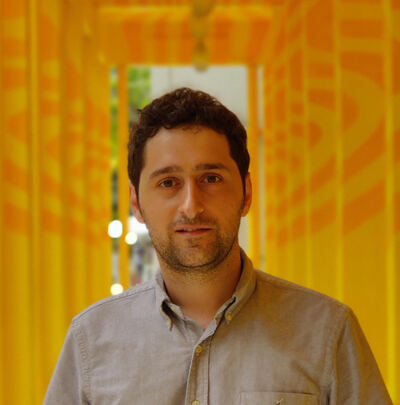
Abdullah Aydeger
(Department of Electrical Engineering and Computer Science, Florida Institute of Technology (FIT), USA)
Bio: Dr. Abdullah Aydeger is currently an assistant professor at the Electrical Engineering and Computer Science Department at FIT. Prior to joining FIT in August 2022, he was an assistant professor at the School of Computing at Southern Illinois University, Carbondale, since 2020. Dr. Aydeger obtained a Ph.D. Degree in Computer and Electrical Engineering from Florida International University in 2020. His research interests are post-quantum cryptography, network security, and virtualization.
Tutorial #2: Robust and fast sensing enabled authentication and key agreement for 6G
Duration: 120 minutes
Abstract: In this tutorial we focus on physical layer security (PLS) for 6G automation. We make the case that both strong security guarantees and very low latencies are attainable with PLS for authentication and key agreement (AKA). In our discourse, we first, we revisit the fundamental security requirements for AKA, and examine how these requirements can be translated into concrete PLS design goals. Second, we present novel AKA mechanisms that leverage trustworthy physical features—such as the angle of arrival in digital-array multiple-input multiple-output systems—as well as machine learning techniques to enable fast, low-overhead AKA protocols that are provably robust against both passive and active attacks. Finally, we outline prospective use cases and research directions for PLS within emerging 6G networks.

Arsenia Chorti
(ETIS Laboratory, ENSEA, CY Cergy Paris University, CNRS, France, and with Barkhausen Institut gGmbH, Germany)
Bio: Arsenia Chorti is a Professor at the École Nationale Supérieure de l’Électronique et de ses Applications (ENSEA) at the ETIS Lab UMR 8051, Research Fellow of the Barkhausen Institut gGmbH and a Visiting Scholar at Princeton University. Her research spans the areas of wireless communications and wireless systems security for 5G and 6G, with a particular focus on physical layer security. Current research topics include : context aware security, multi-factor authentication protocols, 5G / 6G and IoT, anomaly detection, machine learning for communications, new multiple access techniques and scheduling. She is a Senior IEEE Member, IEEE Distinguished Lecturer (2024-2025), Associate Editor in Chief of the IEEE ComSoc Best Readings, Member of the IEEE INGR on Security, served as Chair of the IEEE Focus Group on Physical Layer Security between
2021-2024 and is a Member of various ITU Working Groups. She has participated in the reduction of the ITU report M.2516-0 on Future technology trends of terrestrial International Mobile Telecommunications systems towards 2030 and beyond (sections on trustworthiness). She has served in the IEEE P1940 Standardization Workgroup on Standard profiles for ISO 8583 authentication services and was a member of the IEEE Teaching Awards Committee. She was selected as one of the “100 Brilliant and Inspiring Women in 6G”.
Tutorial #3: Security and Privacy for Telecommunication Networks in the Post-Quantum Era
Duration: 125 minutes
Abstract: Open RAN (O-RAN) is a novel industry-level standard for RAN (Radio Access Network) which defines interfaces supporting inter-operation between vendors’ equipment and offering network flexibility at a lower cost, integrating network softwarization and Artificial Intelligence to enhance RAN devices’ operation, enabling new development possibilities for stakeholders within an open ecosystem, but also introducing security and privacy challenges that require careful management; this tutorial provides a deep analysis of these risks, discusses potential security and privacy solutions, reviews relevant standardization efforts, explores how Open RAN can deploy advanced security in 5G and beyond, and offers guidance for future research through two demonstrations.
Engin Zeydan
(Centre Tecnològic de Telecomunicacions de Catalunya (CTTC), Spain)
Bio: Dr. Engin Zeydan is a Senior Researcher in Services as Networks (SaS) at Centre Tecnologic de Telecomunicacions de Catalunya (CTTC) in Barcelona, Spain, holding a PhD from Stevens Institute of Technology (2011), an M.S. and B.S. from Middle East Technical University (2006, 2004), with prior experience as an R&D Engineer at Avea and Turk Telekomunikasyon, and part-time instructor at Ozyegin University; he has led European-funded research projects including Horizon Europe UNITY-6G and Horizon 2020 MonB5G, contributed to other projects like 5Growth, Clear5G, MOTO, and CROWD, authored over 150 papers and holds 12 patents, with research interests in telecommunications, data engineering/science, and network security.

Madhusanka Liyanage
(Network Softwarization and Security Labs (NetsLab), University College , Dublin, Ireland)
Bio: Dr. Madhusanka Liyanage is an Associate Professor/Ad Astra Fellow and Director of Network Softwarization and Security Labs (NetsLab) at University College Dublin, Ireland; a Docent/Adjunct Professor at the University of Oulu, Finland, the University of Ruhuna, Sri Lanka, and the University of Sri Jayawardhanapura, Sri Lanka; holder of a Doctor of Technology in communication engineering from the University of Oulu (2016); recipient of the Marie Skłodowska-Curie Actions Fellowship and the Ireland Postdoctoral Fellowship (2018-2020); former Visiting Research Fellow at CSIRO Australia, Infolabs21 Lancaster University UK, UNSW Australia, University of Sydney, LIP6 Sorbonne University France, and University of Oxford UK; senior IEEE member; awarded the 2020 IEEE ComSoc Outstanding Young Researcher; ranked among the top 2% of scientists worldwide (2020-2023); recipient of the IRC Researcher of the Year 2021 and 2023 awards, the 2022 Tom Brazil Excellence in Research Award, and an Irish Research Council Early Career Researcher commendation; co-authored over 250 publications, including three books, four edited books with Wiley, and two patents (Google Citations: 19,000+, h-index: 60+); received four Best Paper Awards; secured over 10 million euros in research funding as PI for three EU H2020/Horizon Europe projects; led multiple research projects including SIGMONA and Naked; served as Finnish national coordinator for EU COST Action CA15127 and management committee member for several others; worked on more than fifteen EU, international, and national ICT projects; and is an expert consultant at ENISA.